The collection "The Changing Media“, featuring the papers from the FJMC international conference, has been published
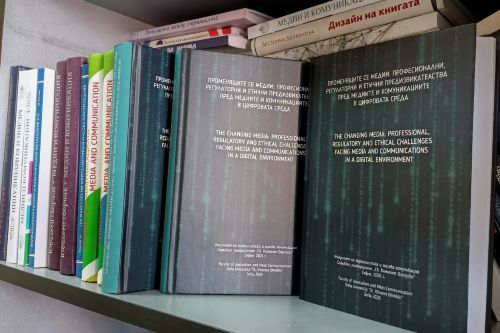
The Faculty of Journalism and Mass Communication at Sofia University “St. Kliment Ohridski” has published the collection "The Changing Media: Professional, Regulatory, and Ethical Challenges Facing Media and Communications in the Digital Environment," edited by Prof. Dr. Veselina Vulkanova. The publication brings together the papers from the sixth international academic conference, held on October 30 and 31, 2025, in Sofia as part of the established series “Communications and Media of the 21st Century.”
More than 60 researchers from Bulgaria, Lithuania, Slovakia, Georgia, India, Poland, and Romania participated in the forum. The conference’s academic partners included prestigious foreign universities—Eastern Kentucky University (USA), Vilnius University and Vytautas Magnus University (Lithuania), the Polytechnic Institute of Lisbon (Portugal), Shota Rustaveli State University of Batumi (Georgia), and the University of Bucharest (Romania).
The nearly forty studies and articles in this volume are organized into six thematic areas that highlight the key tensions in contemporary communication: artificial intelligence, algorithms, and hybrid media; digital infrastructures and audience practices; media trust and media influence; politics, crisis communication, and democratic discourse; platforms, influencers, and moderation; journalism, culture, and democratic discourse. The studies cover the implementation of generative artificial intelligence in Bulgarian media, automated journalism and the risks of generated misinformation, podcasts and platformization, communication strategies surrounding the introduction of the euro, coverage of Ukrainian refugees in regional media, the ethical boundaries of influencer marketing, public media on TikTok, and dozens of other current topics.
In her foreword, Prof. Vulkanova emphasizes that technological change is never merely technical: automation transforms work processes and business models, platforms redistribute visibility and authority, and new interfaces change the way citizens engage with truth claims. This raises questions of ethics, responsibility, and professional identity, which universities must address openly and critically. It is precisely during periods of transformation and crisis, she notes, that the need for quality journalism and journalism education grows as a countermeasure to fake news and disinformation, and the first lesson for young generations of journalists remains the lesson of responsibility to the audience and connection with society.
The anthology continues the tradition of the faculty, which for more than half a century has been training specialists in journalism, public relations, publishing, and communications management, and the scholarly series resulting from its international conferences has established itself as one of the most prominent forums for academic dialogue in the field of media and communications in Bulgaria.