FJMC held a second conference on the Media Masters project, dedicated to disinformation and media literacy
On December 3, 2025, the second conference on the European project "Media Masters: Improving Media Literacy" was held in the Aula Magna of the Faculty of Journalism and Mass Communication, led by Prof. Dr. Veselina Vulkanova, Dean.
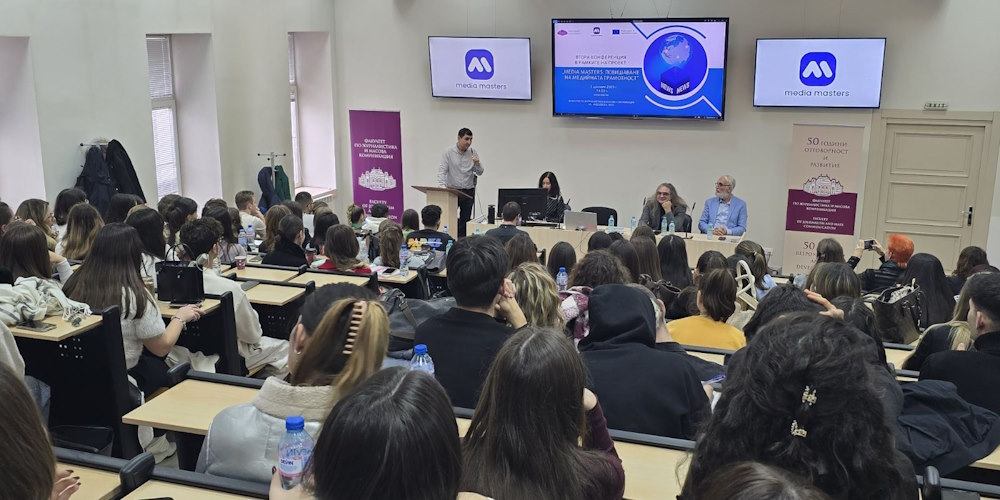
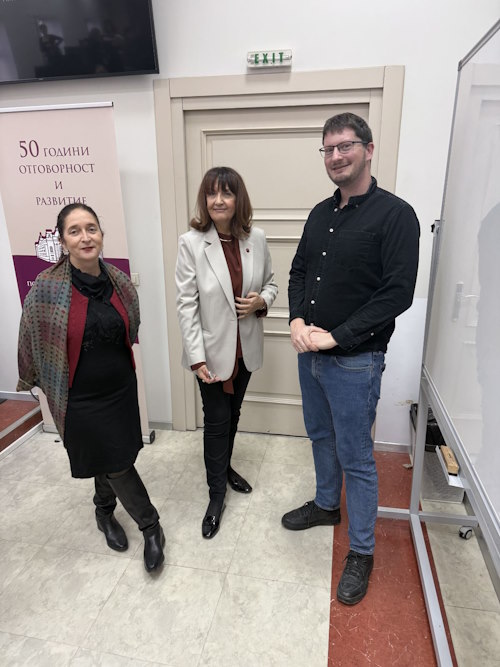
The event attracted a total of 110 students, teachers, and representatives of the media and civil society working on issues related to disinformation and the challenges of digital communication. Among the official guests were Ivo Todorov, director of the Digital Programs Department at Bulgarian National Radio, Vladimir Yonchev, editor-in-chief of OFFNews, as well as experts from the Ministry of Education and Science and members of the faculty's dean's office.
The conference was opened by Prof. Nikolay Mihaylov, Deputy Dean of the Faculty of Journalism and Mass Communication. He emphasized that fake news is a persistent communication phenomenon associated with both completely false statements and deliberately distorted information that influences public opinion and people's behavior. Prof. Mihaylov linked disinformation to conspiracy theories and stressed the need for the academic environment to develop students' skills in analysis, fact-checking, and critical thinking. Assoc. Prof. Svetlana Stankova added that fake news is not a new phenomenon and that today its spread is accelerated by the information environment and social media algorithms, which amplify the most emotional content.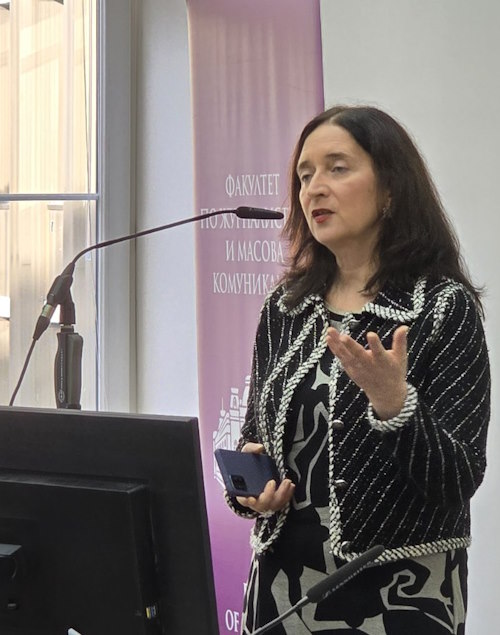 Assoc. Prof. Mila Serafimova presented the main directions of the Media Masters project, implemented by partners in nine European Union countries. She explained that the initiative aims to develop media literacy through a practical approach in which pupils, students, teachers, and journalists participate in simulated situations close to the real digital environment. The project includes a series of events and training sessions in which participants work with specific examples of disinformation and learn about the mechanisms through which manipulative techniques operate.
Assoc. Prof. Serafimova emphasized that FJMC plays a key role in the research part of the project, as the faculty conducts test sessions with students and pupils. Their reactions, questions, and comments show which elements work best and where improvements are needed to make the developed resource more effective in an educational environment.
She recalled Johan Huizinga's idea from "Homo Ludens" (Homo Ludens) that play is a natural form of learning and understanding the world. This is precisely what lies behind the logic of Media Masters—through game scenarios, participants come to understand for themselves how misleading narratives are constructed and what makes them convincing.
In her words, the game is only the beginning of the process. The real value comes from the discussions, debates, and encounters between different points of view, which help young people develop critical thinking and sustainable habits when working with information.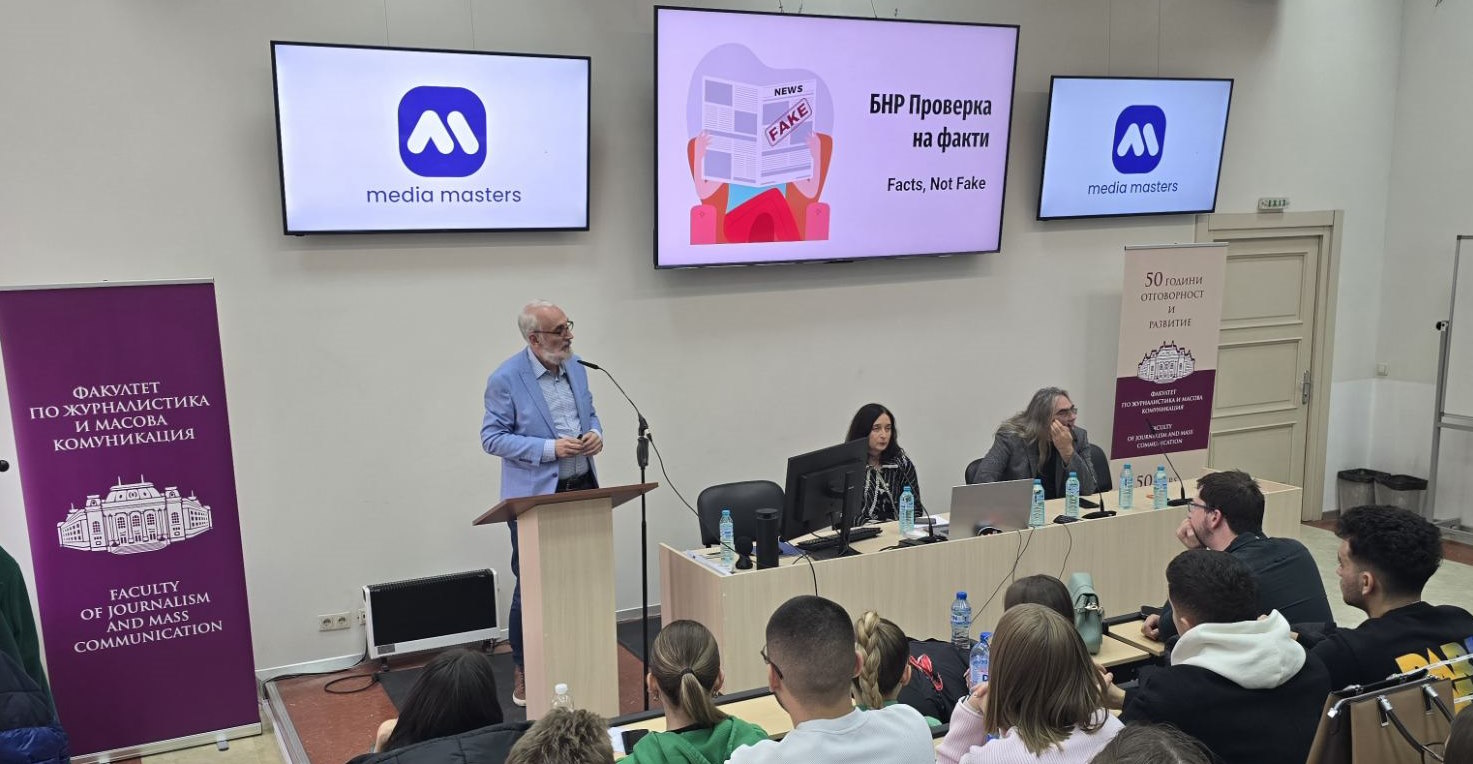
The topic of recognizing manipulative techniques was continued by Ivo Todorov, director of the Digital Programs Department at Bulgarian National Radio, and journalist Vladimir Yonchev, who presented examples from their daily practice. They engaged the audience with specific examples from their work and showed how fake news appears in the daily news flow, how its context changes, and why sometimes reliable content takes on a misleading meaning.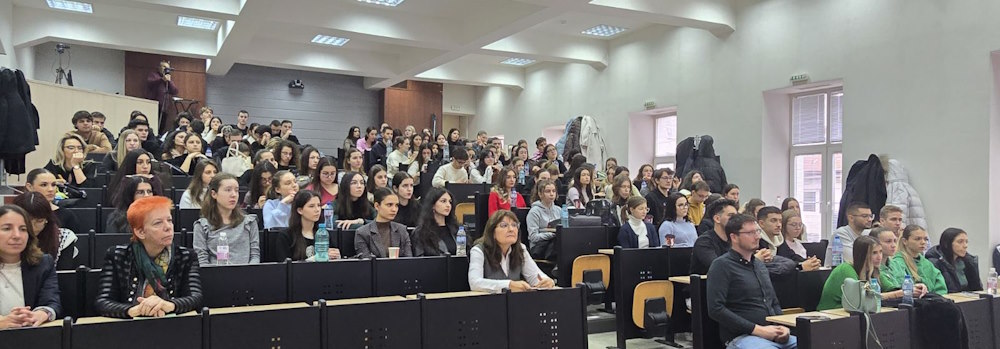
Ivo Todorov emphasized that fake news often relies on strong emotions and fears, which makes it particularly easy to spread. He noted that reactions on social media—comments, shares, likes, or dislikes—increase the visibility of misleading content, regardless of whether users support or deny it.
Todorov presented the work of the fact-checking team at Bulgarian National Radio, which checks dubious claims on a daily basis through reliable sources and expert assessments. He emphasized that trust is the main asset of public media. That is why fact-checking is one of the leading areas of focus on BNR's new news portal, which has a new address and structure to make verified information more visible and accessible.
Todorov also drew attention to the misuse of technology, especially content created or manipulated by artificial intelligence, such as fake voices, faces, or videos. According to him, this is a new challenge that makes critical thinking even more important when working with online information.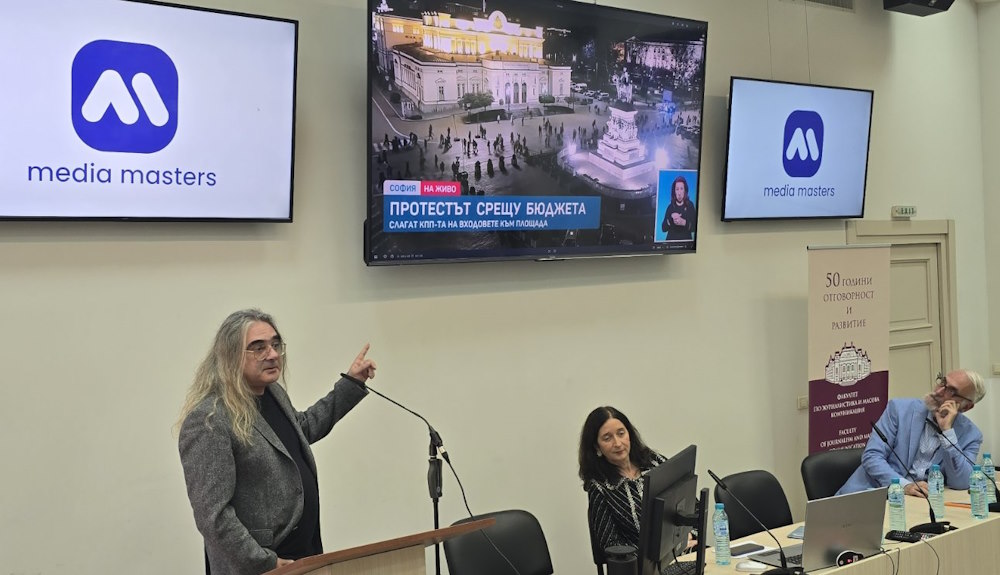
Vladimir Yonchev steered the conversation toward how narratives are created in the media. He emphasized that "the battle is over narratives" and that effective propaganda very rarely uses fiction—it most often relies on completely true facts, but arranged in such a way as to lead to a different meaning.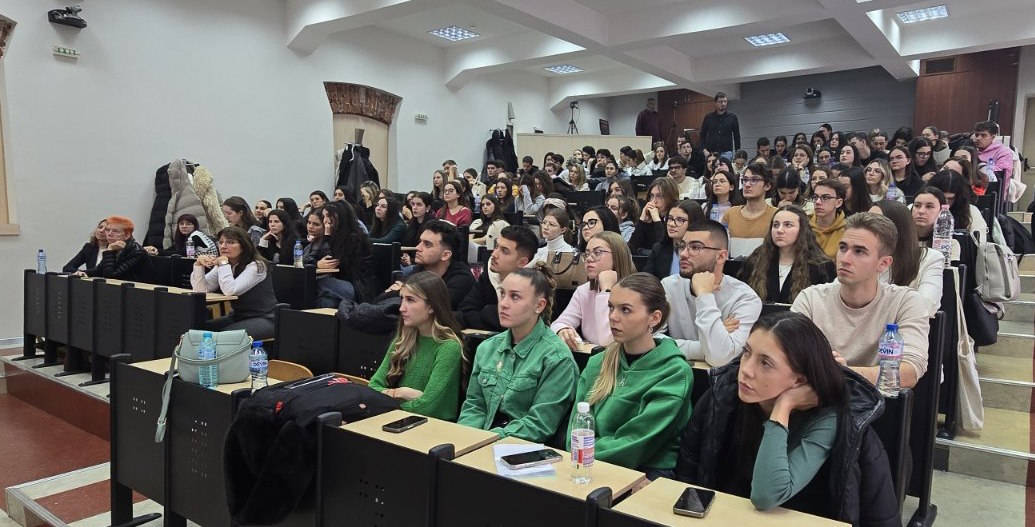
Yonchev gave examples from the current public environment in which authentic images, videos, or statements are used to influence and impose ready-made interpretations. According to him, this is the most difficult thing to recognize—the moment when the facts are real, but the story that is built with them misleads the audience.
He also drew attention to language: nicknames, labels, generalizations, and framing can change attitudes toward a person or event much more strongly than the information itself. He therefore emphasized that journalists bear a great responsibility when reporting on a situation—not only in terms of what they include, but also how they arrange it.
Yonchev warned that in situations of public tension, the narrative can become completely detached from the actual event, turning the story into a tool for suggestion. That is why, according to him, future journalists must develop a sense of when the facts sound credible, but the meaning behind them has been changed.
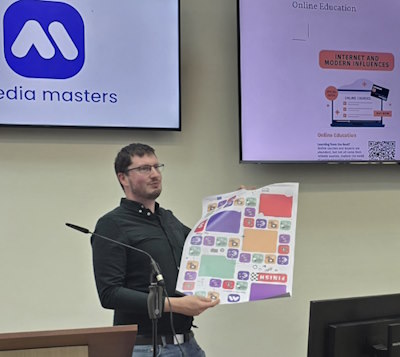 At the end of the program, Dr. Yordan Karapenchev presented the game tool developed under the project. He drew attention to the online version of Media Masters and specified that the game is available for free download from the official website:
https://mediamasters.mpanel.app/page/partners
Dr. Karapenchev emphasized that the tool has no commercial purpose and is not for sale. The game was created specifically for the project and is intended to be used by pupils, students, and teachers as a practical tool for recognizing disinformation. He noted that the application expands the scenarios and facilitates work with different cases, making media literacy exercises more accessible.
 Funded by the European Union. The views and opinions expressed are those of the author(s) alone and do not necessarily reflect the views of the European Union or the Education, Audiovisual and Culture Executive Agency (EACEA). Neither the European Union nor the EACEA are responsible for them.