The FJMC brought together Bulgarian and international researchers at an international seminar on media and digital communication
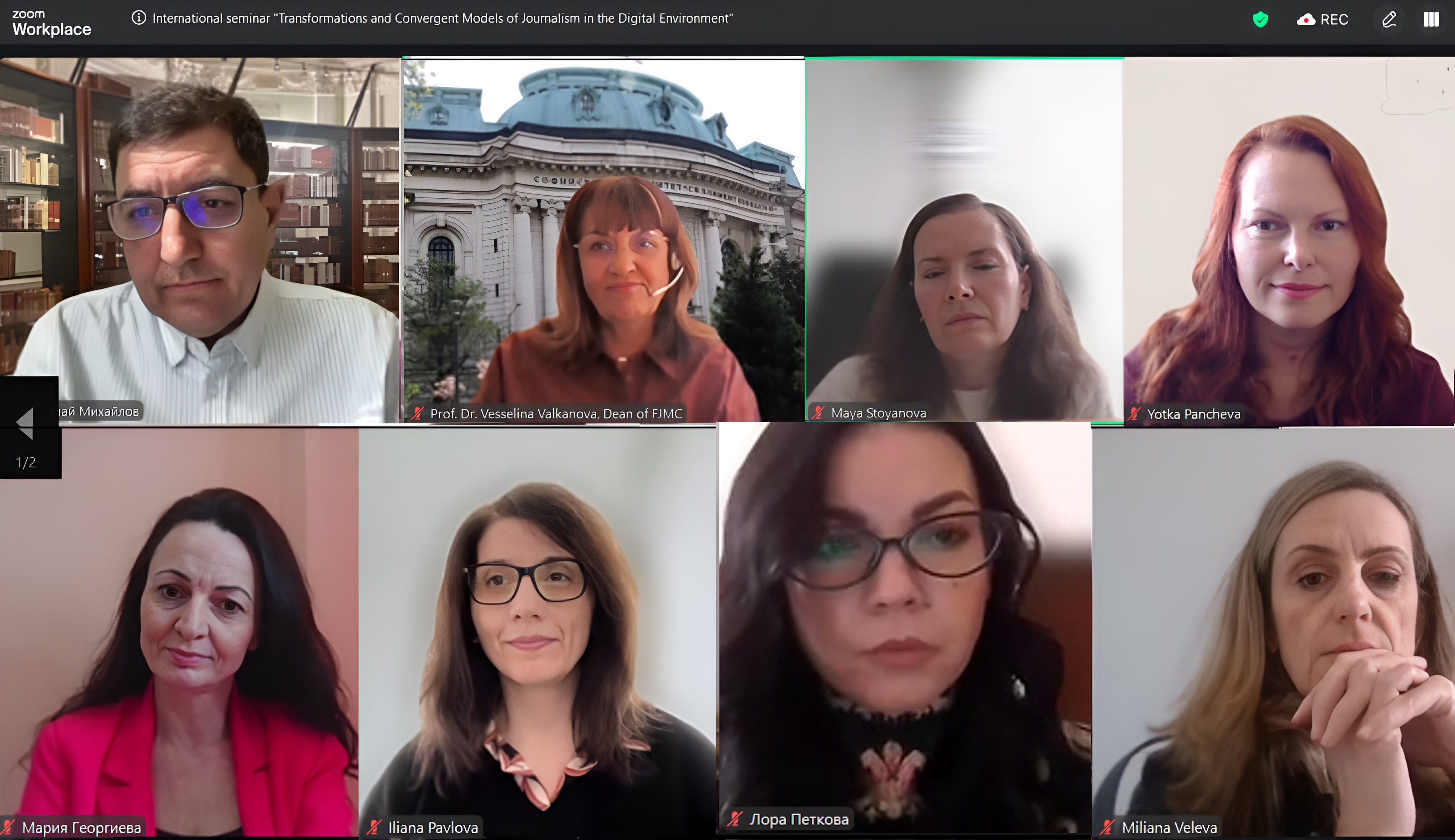
On March 26, 2026, the international seminar “Transformations and Convergent Models of Journalism in the Digital Environment” was held on the Zoom platform. The event was organized as part of Project No. KP-06-N65/9, dated December 12, 2022, on the topic “Transformation and Convergent Models of Journalism in the Process of Digitalization and in Digital Society in a Communicative Context: A Dispositive Analysis,” funded by the Scientific Research Fund. The forum began with an opening address by Prof. Dr. Nikolay Mihaylov, project leader.
The seminar was dedicated to current scientific and professional issues related to transformations in journalism, media, and communication in the digital environment. The program included three thematic panels conducted in Bulgarian and English, which addressed a wide range of issues and research perspectives: from professional ethics, trust in journalism, and the effects of generative artificial intelligence, to platformization, visual communication, political polarization, and new convergent models of public sphere.
During the first panel, “Journalism, Media Trust, and Digital Transformations”, presentations were delivered on the Bulgarian media context and research into the media environment, the profession, and the implementation of generative artificial intelligence in journalism—by Prof. Dr. Veselina Valkanova, on professional ethics in the context of digital transformation—by Prof. Dr. Nikolay Mihaylov, as well as on public attitudes toward traditional and social media—by Assoc. Prof. Dr. Kaloyan Haralampiev. Special attention was also given to visual polarization in digital journalism, the new opportunities and risks that artificial intelligence poses in the public sphere, as well as differences in reactions to AI content across various platforms.
The morning session also addressed issues related to the digital transformation of sports event coverage, the interaction between television journalism and algorithmic data visualization in election coverage, changes in the newsroom and content types in the context of the digital revolution, as well as new models of political communication that emerged during the protests in Bulgaria in late 2025. Other highlights included trust in journalism in the digital media environment and algorithmic PR campaigns as part of the changing communications landscape.
The second panel,“Strategic, Institutional, and Visual Communication in the Digital Age”, focused on the strategic, institutional, and visual dimensions of communication in the digital era. The presentations in this session focused on fact-checking as a tool to counter disinformation, the new dimensions of freedom of speech in the media and communication environment, as well as convergent approaches in strategic communications and brand management.
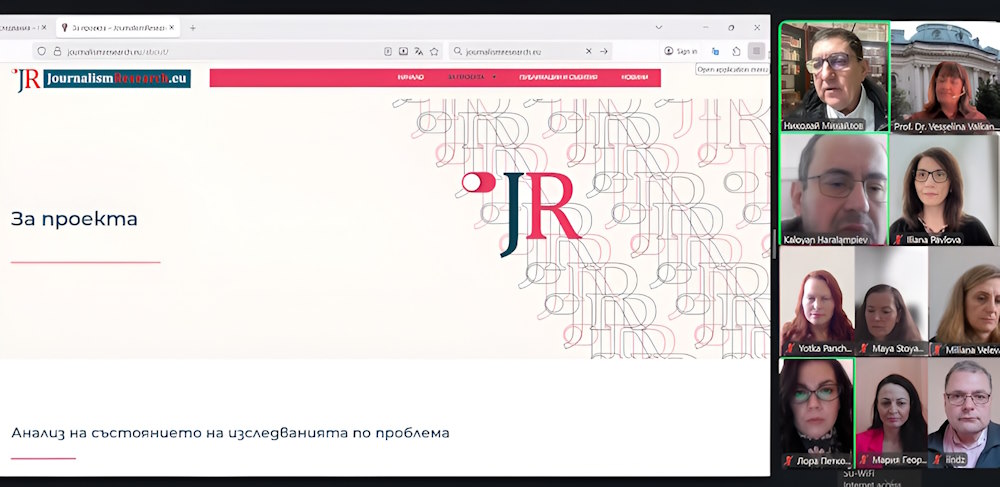
The same panel also examined models of communication between public institutions, the media, and society in the context of digitalization, the transformation of journalism and the development of parasocial relationships in digital media, the visual communication of television brands in the digital ecosystem, and changes in media business models under the influence of social networks as a new economic regulator. Other topics discussed included the platformization of journalism and convergent editorial practices, the communication aspects of diplomacy, institutional transparency in the digital environment of public and private hospitals in Bulgaria, as well as PR strategies for integrating artificial intelligence into the media ecosystem, with an emphasis on trust and reputation management in public media.
The third panel, “Platform Publics, Ethics and Convergent Journalism”, featured researchers from Bulgaria, Romania, Poland, Georgia, and the United States, lending a distinct international dimension to the discussion. The panel focused on the relationship between digital media, social polarization, platform-based public spheres, collective memory, and the ethical shortcomings of synthetic content.
The presentations in the English-language session covered topics such as the transition from a media-based to a platform-based public sphere in the context of political communication during the 2024 elections in Romania, the significance of digitized Polish print sources for contemporary journalism, the resilience of collective memory in a digital environment, as well as the ethical void in AI-synthesized news. Also discussed were the transformation of public relations from intermediary to content creator, invisible automation in journalistic practice, visual advocacy in contexts of democratic regression, the challenges facing journalism in verifying synthetic content and deepfake materials, public perceptions of television advertising targeting children, as well as new integrated communication models in cross-cultural advertising.
With its thematic scope, the seminar confirmed the importance of interdisciplinary and international academic dialogue on issues that affect not only the journalism profession but also the broader communication environment in which public attitudes, trust, visibility, and social interpretations are formed today. The presented papers outlined the dynamics of contemporary media processes and emphasized the need for critical examination of the technological, ethical, and societal consequences of the digital transformation.